Concerns about excessive mobile phone use among youth are mounting. We present estimates of behavioral and contextual peer effects, along with comprehensive evidence on how students’ own and their peers’ app usage affect academic performance, physical health, and labor market outcomes. Our analysis draws on administrative data from a Chinese university covering three student cohorts over four years. We exploit random roommate assignments, differential exposure to a policy shock (gaming restrictions for minors), and differential exposure to a discrete event (the introduction of a blockbuster video game) for identification. App usage is contagious: a one s.d. increase in roommates’ in-college app usage raises own usage by 5.8%. High app usage is harmful across all measured outcomes. A one s.d. increase in app usage reduces GPAs by 36.2% of a within-cohort-major s.d. and lowers wages by 2.3%. Roommates’ app usage reduces a student’s GPA and wages through both disruptions and behavioral spillovers, generating a total negative effect that exceeds half the magnitude of the impact from the student’s own app usage. Extending China’s three-hour-per-week gaming restriction for minors to college students would boost their initial wages by 0.9%. High-frequency GPS and app usage data show that heavy app users spend less time in study halls, are more frequently late or absent from class, and get less sleep.
The third challenge stems from the well-known difficulties in identifying peer effects in empirical settings, including the endogeneity of peer group formation and the “reflection problem” first articulated by Manski (1993)—an individual’s behavior both affects and is affected by their peers, making it difficult to establish causality. Disentangling the two classical types of peer effects, behavioral (endogenous) and contextual (exogenous) peer effects, is even more challenging (Manski 1993; Bramoullé, Djebbari, and Fortin 2020). In our context, the behavioral peer effects refer to how roommates’ action of app playing influences a student’s own app usage. Contextual peer effects, by contrast, capture how peers’ predetermined characteristics influence a student’s outcomes independent of their actual behaviors. In our setting, the key regressor capturing contextual peer effects is roommates’ precollege game usage, which may reflect traits such as motivation, attitudes toward academics, or established study habits.

SkillBoost-v2
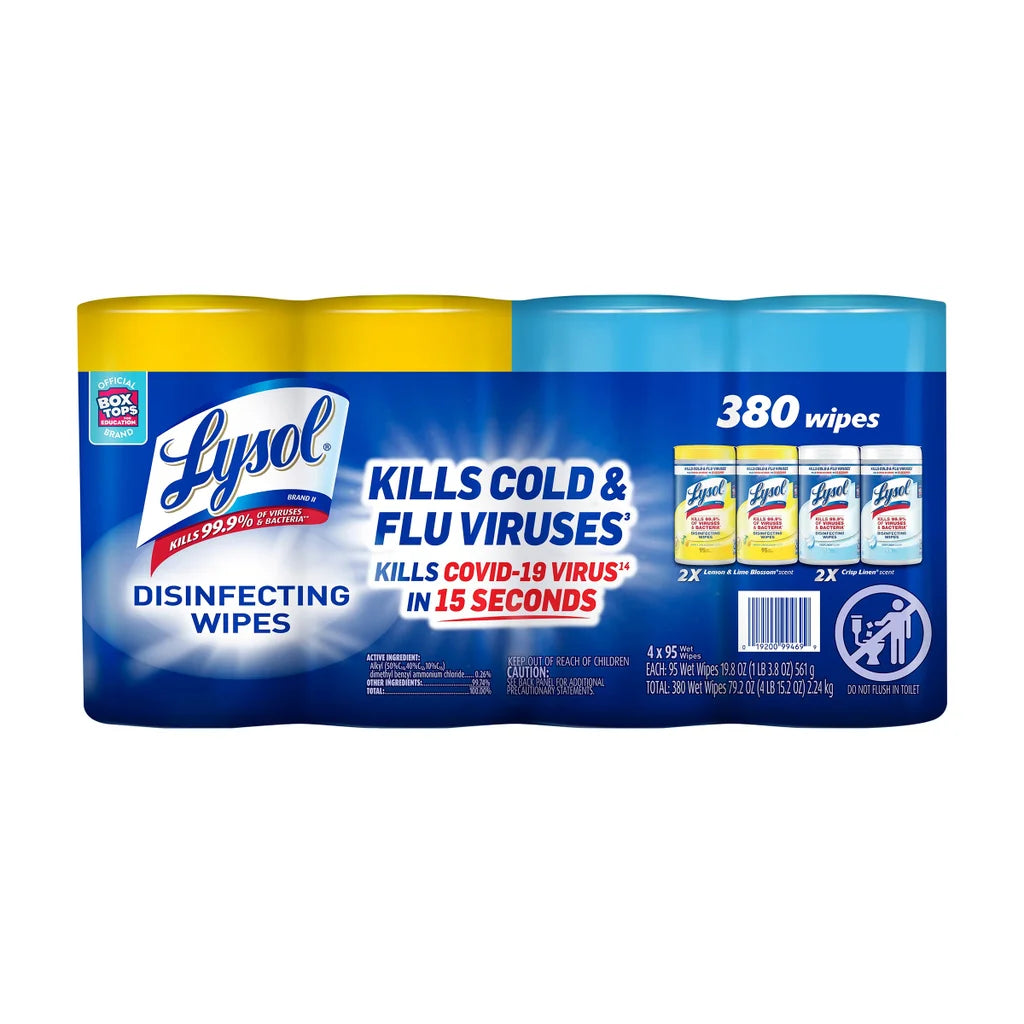
Lysol Disinfecting Wipes, Variety Pack, 95-count, 4-pack
Lysol Disinfecting Wipes, Variety Pack, 95-count, 4-pack
Couldn't load pickup availability
-
2 - Crisp Linen Scent
-
2 - Lemon & Lime Blossom Scent
-
Kills 99.9% of Viruses & Bacteria
-
Kill Antibiotic Resistant Bacteria
-
380 Total Wipes
DISINFECTING WIPES KILLS 99.9% OF VIRUSES AND BACTERIA: Lysol Disinfecting Wipes are tested and proven to clean and kill 99.9% of viruses and bacteria, including 8 cold and flu viruses (when used as directed).
- KILLS COVID-19 VIRUS: Tested and proven to kill COVID-19 virus (Kills SARS-CoV-2 on hard, non-porous surfaces in 15 seconds), EPA Reg No.777-114.
- MULTI-PURPOSE CLEANING WIPES 3X STRONGER THAN A PAPER TOWEL: These disinfecting cleaning wipes are 3x stronger than a paper towel.
- USE ON MULTIPLE SURFACES: Germs and messes occur on more than kitchen and bathroom surfaces; conveniently tackle any tough surface including remotes, tablets, and smartphones with these multi-surface cleaning wipes.
Lysol's Disinfecting Wipes can safely be used on a variety of surfaces to clean and to kill 99.9% of viruses and bacteria, including the Covid-19 virus in just 15 seconds* (*Use as directed). Wipes can be used on a variety of household surfaces such as kitchen counters, bathrooms, doorknobs, and leave surfaces clean, smelling fresh and without any stick residue. Each Wipe is designed to go a long way - 1 Wipe can clean up to 21sqft which is almost as big as a kitchen countertop! Canister lids snap close with one finger, so you can be confident that your wipes will stay fresh. Effective disinfecting has never been easier with Lysol! Lysol Disinfecting Wipes kill Salmonella Enterica (Salmonella), Influenza A Virus (H1N1), Herpes Simplex Virus Type 1 and Respiratory Syncytial Virus on hard, non-porous surfaces in 4 minutes. Disinfects including: Escherichia coli, Staphylococcus aureus (Staph), Influenza H7N9 and Streptococcus Pyogenes (Strep) among others. Kills 99.9% of Viruses and Bacteria when used as directed.Product details have been supplied by the manufacturer and are hosted by a third party.
Share